

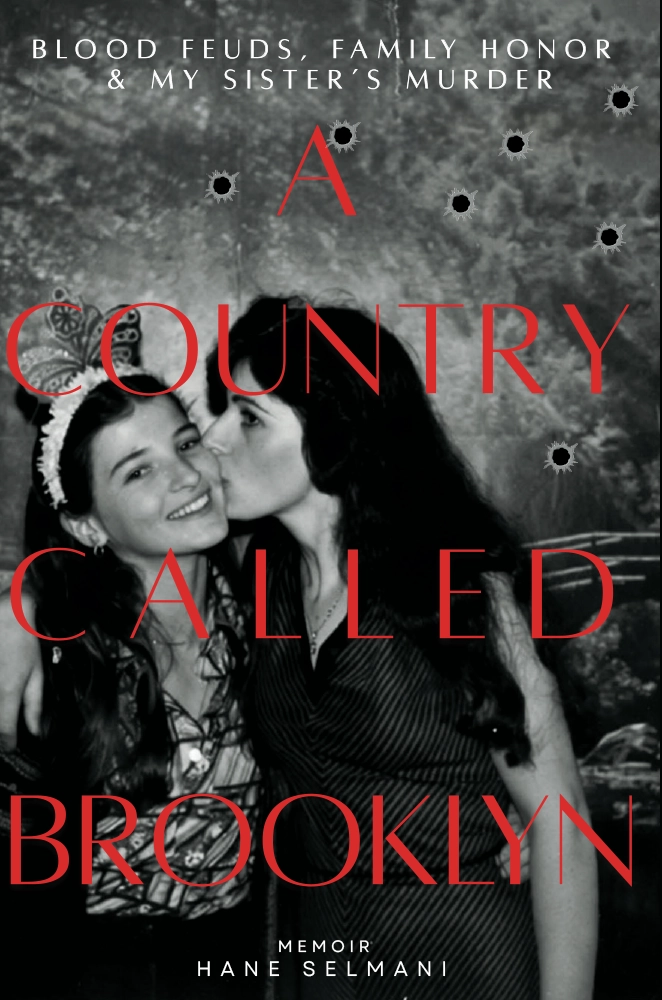

Book Description
Growing up in 1970s Brooklyn under 500-year-old Albanian honor codes made sixteen-year-old Hane feel special. She accepted female submission, arranged marriages, and the belief that God determined her fate. Then her favorite sister, Jariyeh, was murdered by her husband. Suddenly nothing made sense. What had God done? And why did her brother set out for revenge? Wasn’t the killer God’s accomplice? But Hane dared not ask. Good girls didn’t question—they obeyed.
A Country Called Brooklyn begins thirty years later, when Hane finds the courage to investigate the murder—at the risk of disgracing her family name. Was it an honor killing, as the husband told Jariyeh’s children? Or had drug dealers made him do it, as her family believed?
For nearly two decades, Hane wove together interviews, court transcripts, and the ancient honor codes that shaped her upbringing. What she uncovered was not what she expected—and the deeper she went into her sister’s life, the more she was forced to confront the beliefs that had shaped her own.
CRITICAL ACCLAIM
 Kirkus Reviews
“A well-crafted memoir about loss, memory, and fighting back against oppressive traditions.”
“Selmani’s prose provides the perfect companion through the domestic tumult… skillfully reconstructing realistic dialogue that grounds the action in its setting.”
“Above all, a story of the ways that men subjugate women, woven deftly into an account of the author’s quest for truth.”
Verdict: GET IT
Read full Kirkus review
 Clarion Reviews — ★★★★☆
“A gripping account of an interfamily blood feud that runs alongside critiques of a patriarchal culture…”
“A captivating and harrowing memoir…”
“A captivating and harrowing memoir… about how Albanian honor and tradition led to an American tragedy and personal emergence.”
— Meg Nola
Read full Clarion review
 BookLife — A Rating
“Selmani sets out to honor her sister Jariyeh’s legacy in this powerful memoir…”
“Rather than turning family members into villains, she shows how people are shaped by their surroundings…”
A Country Called Brooklyn becomes not just an account of one killing, but a thoughtful exploration of how ordinary people inherit systems they did not build.
Production Grades: Design A | Editing A | Marketing Copy A
Read full BookLife review
 IndieReader — 4.8 Stars
“A beautifully written blend of family memoir, true crime, cultural history…”
“Filled with cultural and personal insights… this book is very much about love and compassion.”
“Destined to be a widely read book about justice and love.”
— Allison Barilone
Read full IndieReader review
Shqipe Malushi
A Country Called Brooklyn is a powerful memoir of immigration, honor, and forgiveness. After the murder of her sister in Brooklyn, Hane embarks on a decades-long search for truth, confronting the patriarchal code that shaped her family’s fate. Tender yet unflinching, this is a story of resilience, remembrance, and the fierce grace of a woman who chose light over silence.
Todd Gross, author of the award-winning LOY series.
“A Country Called Brooklyn” is a great read that has universal appeal. It’s a rip-roaring story of shattered lives and shattered illusions, bringing us to a place we’ve never been, yet somehow know in our bones. Far more than a true-crime drama, it is a most human tale. And Hane’s unique literary style only makes it better, (and the fact that it’s all true is even more stunning). Can a Netflix series be far behind? I loved it!”
—Todd Gross, author of the award-winning LOY series.
Alida Malushi
Wow, Hane! I could not put it down. This is going to be groundbreaking work for Albanian women. It’s historical. I have yet to clarify for myself whether my reaction to it is as an Albanian, as a woman, or simply as a human. I’m not writing this to please you, but to acknowledge that, beyond the tragedy, you hit the core of a problem many women and men around the world will identify with. Thank you for giving me the privilege of reading an early draft!
Tom Dawson
Powerful in its simplicity, Hane brings her world to life in this search for truth. It is woven from strands of love and envy, honor and shame, culture and the clash with reality.
Shpresa Elezi
Hane, I couldn’t put this book down — I read it in less than 10 hours. From the very first pages, I felt completely pulled into it.
Over the years, Rick would talk about Xharije so often and with so much admiration. Anytime he met a woman who was especially graceful, charming, and magnetic, he would always say, “That’s how Hane’s sister, Xharije, was.”
The love you have for your sister was so deep and genuine that it made me feel connected to her too, even though I never had the privilege of meeting her. Through your words, your memories, and the way you carry her in your heart, I feel like I came to know and love her a little myself.
I still remember sitting with you at Reichenbach Hall around 2015, watching a soccer game when you first told us about this book. To now hold it in my hands and read the story you promised yourself you would one day tell feels incredibly moving. I’m truly so proud of you — not just for writing a beautiful book, but for honoring your sister with so much love, honesty, and heart
Neena Bhanti
Hane Selmani’s, A Country Called Brooklyn, is a powerful and deeply moving memoir that gives a voice to so many whose stories often go unheard. Written with remarkable emotional purity and honesty, the book courageously examines longstanding belief systems. Selmani invites readers intimately into her family life, offering a rich education on Albanian traditions, culture, and values while honoring the memory and legacy of her sister with profound love and grace. Inspirational, heartfelt, and beautifully written, this is a book that stays with you long after the final page. It is a masterpiece! I was captivated with her storytelling from
page one and would love to see this on the silver screen!
Enkolana Cekaj- Mundija
I’ve always had a passion for reading coming-of-age novels; yet none of them related too much to my own journey- they were missing the cultural aspect. For the first time, I saw parts of my own upbringing, language, humor, and family dynamics reflected in a book, and that experience alone was incredibly meaningful. The first page of your book felt like something I had never read before. Perhaps it was my bias as I finally read Albanian words in a book, but from the first page to the last, I could not put it down! I read it all in one day and briefly stopped to send it as a recommendation to so many of my friends and family. I laughed, I cried, I reflected as I read about you, your sister, your ponderings on life, about your family relationships, and how each family member developed. I found everyone so admirable because, as Albanians, we all have similar friends and family.
I had never heard of your sister’s story, and it made me so sad to know life was even harder for the generation ahead of me, as it certainly shows in the lives of some of the women, men, and children we all know. The way you infused our culture into your story was seamless. When you asked questions, so did I. When you explained a custom, I already knew it. When you translated song lyrics, I learned new songs. I appreciated the nuances of being a northern Albanian, an Albanian from Kosovo, an Albanian who immigrated to Kosovo to escape communism, and an Albanian living in New York. Each experience was distinct, yet connected through a shared culture and history.
I especially loved your ability to tie in the Kanun so often, because although we Northerners follow it, we rarely refer to specific sections and laws, which helped me to identify the roots of our actions (i.e., walking our guests all the way to the car- I had never thought about how they are still “in your home” and under your bese.) The connections you made to Islam and Catholicism, as well as to our more spiritual past, were important to me as they reflect the balance we maintain as a people. More than anything, I appreciated how this book preserved pieces of our culture that are often understood but rarely explained. So many of the traditions, expectations, and values I grew up with simply “were,” passed down without discussion. Through your storytelling, I found myself examining those customs with fresh eyes and gaining a deeper appreciation for their origins.
What makes this book special is that it is not only a story for Albanians. It is a story about family, identity, belonging, sacrifice, and the complicated process of understanding where we come from and becoming ourselves. While I recognized myself in so many of the cultural details, I believe readers from any background will connect with the universal questions woven throughout the narrative. Rather than judging people’s decisions, you helped readers understand the circumstances, history, immigration, culture, fears, hopes, family expectations, responsibilities, and personal struggles that shaped them. As a reader, I was able to see people simply doing their best within the realities they have been given.
By the final page, I felt as though I had learned something new about Albanian history, about the generations that came before mine, and even about myself. This is a book I will recommend often and revisit in the future. Thank you for having the courage to write this story in a way that honored everyone’s humanity with such honesty and compassion.